.png)
“I’ll tell you what else gets on my nerves: when white people make shows that they think Black people will watch!”
Family Guy (1999) itself doesn’t keep side characters’ lore a mystery, so The Cleveland Show (2009) felt like a cash grab. Or like it had an agenda. A good few of Family Guy’s ideas are even borrowed from Cleveland, like Ida Davis’s arc.
So people grumbled. People complained. People averted their eyes. And like the premier of Family Guy in 1999, Black viewers across the nation tuned in abatedly.
For the old-school, flash-animated brainrot that it is, Cleveland proved itself a well-rounded sitcom. Its social commentary —”There’s a couple’a Black guys following you. Oh, I’m sorry, I forgot you’re also Black.” — followed Will Smith’s formula onto a snide trajectory all its own.
There was stereotyping, sure. But just like Family Guy, the joke is really that everything is a joke. Nothing is sacred, nothing is safe, not even the young Black girls who are raised with eurocentric beauty standards shoved in their faces so often they genuinely want Black Barbies with white-Barbie hair for Christmas. The entire reason Cleveland moves (which is what kicks off his own show) is his frustration at being unacknowledged by his comparably dim-witted white friends. And because the show was afforded a fresh start away from its predecessor, it went the less-stupid-comedy route. Cleveland comes into a stable marriage, a middle-class neighborhood, a diverse and welcoming community.
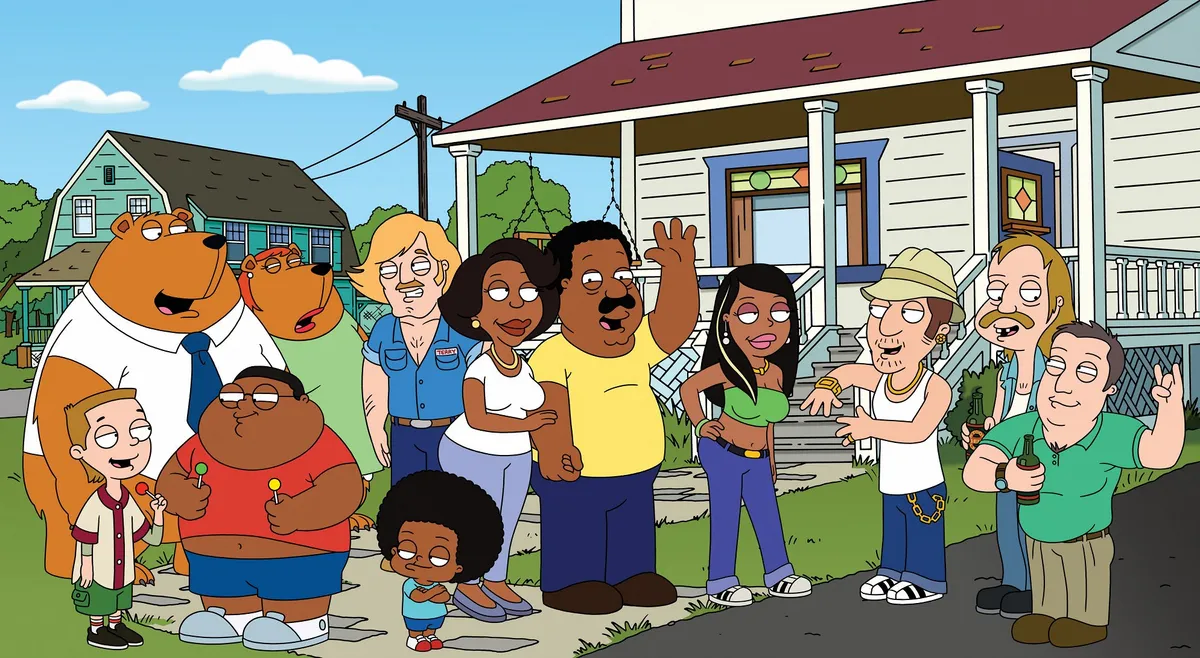
Black-oriented entertainment has historically carried over some quirks born from our past: straight hair, light skin, religious values, a hyper-wholesome veneer you couldn’t get on TV without. The remaining content that didn’t over-cater to white, Christian values was — still is — exploitative, and, dare I say, kinda trashy. So for every Love and Hop Hop, every Zeus Network scripting us to appear violent, confrontational, clique-y, a Cleveland is a lovely counterbalance.
My favorite aspect of the Fox show series is its direct nod to systemic racism without making it a miserable experience. Sadly, even today, a lot of our suburbanites find themselves the only Black people — or the only people of color — in their upscale neighborhoods, and they get othered even in the most welcoming places. Cleveland proves that doesn’t have to be the case…
But that it can be overcome when it is the case. Every ignorant racial retort is shot back twice as funny. Every stereotype gets admitted to (“I’ve never seen a Black guy cry before! I always thought you guys just got more pissed off.”). Every terror haunting Black folks in their daily lives is displayed, broken down, and shamed for how absurd it really is.
And let’s not start on the characters individually. I’ve never seen such a hammed-up, yet accurate, portrayal of a Black family. We’ve got Cleveland’s mom, who devotedly loves her son to a fault; the glasses-wearing blerd you can totally picture reading manga between classes; the teenage girl with perfect hair and a hood white boyfriend; and the aunt who’s a walking Madea reference. They’ve got nicknames for every family member, plus a bunch of successful people who know what they’re about. As someone from a stable household, it was especially pleasant to see Black parents depicted being nice to their kids. The memes out there will have you believing that our families are always yelling and swearing at each other, which just goes to show how much more positive representation we need.
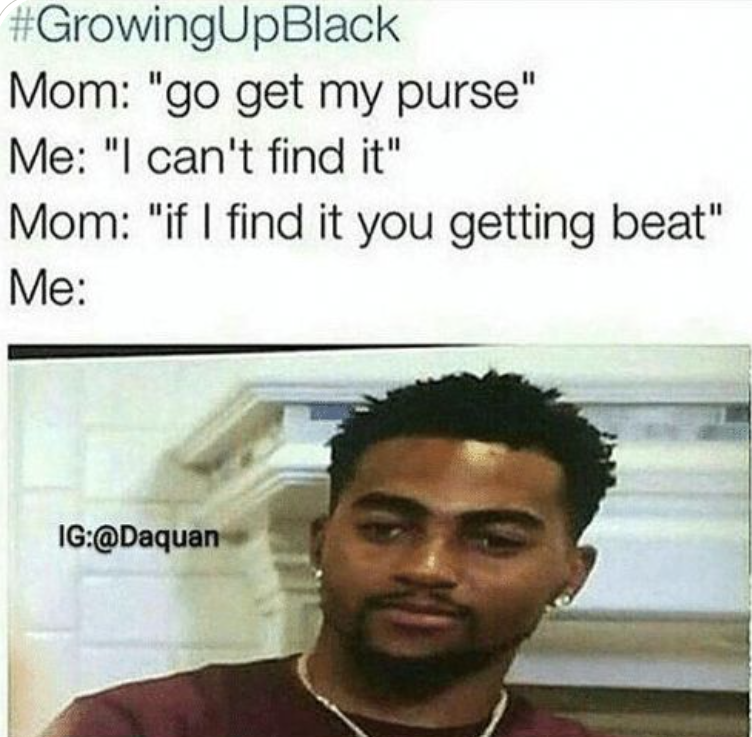
Me? I’m just waiting for the day Black people start pushing back against our own media exploitation. Shows like Baddies, or even overtly wholesome stock like The Cosby Show, don’t give our fictional depictions a chance to just exist as people, nice and mean, morally grey, sure of ourselves and not. Having versions of ourselves that follow the same formulas as any other American entertainment is as important now as it’s ever been. We need people like Boots Riley (I Love Boosters, Sorry to Bother You) and Barry Jenkins (Moonlight) who aren’t afraid to call out disrespect while making a thoroughly engrossing product. We need media that’s not afraid to just show Black people being silly, quirky, daring, stupid, vulnerable, scared, funny, and everything else out there, because we’re people like everybody else, and our personalities and experiences are as diverse as the US itself.
Glo Harolds is a pseudonym wrapped in an enigma wrapped in shea butter and positive vibes. She is a senior at the University of Texas at Austin.



.png)
