
A teachers’ assistant (TA), 4-club president and founder of 1, head of a major honors org’s local student development committee, and university-wide engagement consultant with a major room-board-and-pay tech internship lined up on the opposite end of the country this summer walks into the exam room. This morning, she’s proctoring an upper-level mathematics course that, for most students, is a mere gen-ed hurdle they’d passively tested into.
“I don’t say anything when I see someone using their phone during exams,” she informs me afterwards.“ And I do give them good grades. The tests are multiple-choice, so I can’t prove they’re using AI even though we all know they are.”
When I inquired how she knew — a provided sample exam from the class actually seemed quite solvable from even my math-inept standpoint —, the light fizzled right out of Nora’s eyes. “Because everyone who goes here is dumb as shit.”
It’s true that universities are suffering an IQ drop; The Intelligencer cites “around 2006” as the beginning of the end, residue from a phenomenon called the Flynn Effect.
A self-professed AI consumer herself, Nora, whose name has been changed for privacy, tells me she’s one of few who still use it supplementary to her own original work. "All my essays get checked by real people first, usually my roommates and the writing center. If it’s really important, I’ll also send it around to my friend group. ChatGPT is only there for 1 to 2 paragraphs when I don’t know how to start.”
The logic didn’t quite line up; did she mind grading work she knew wasn’t real? Didn’t it feel pointless? Wasn’t she setting up these students to become her competitors in the workforce?
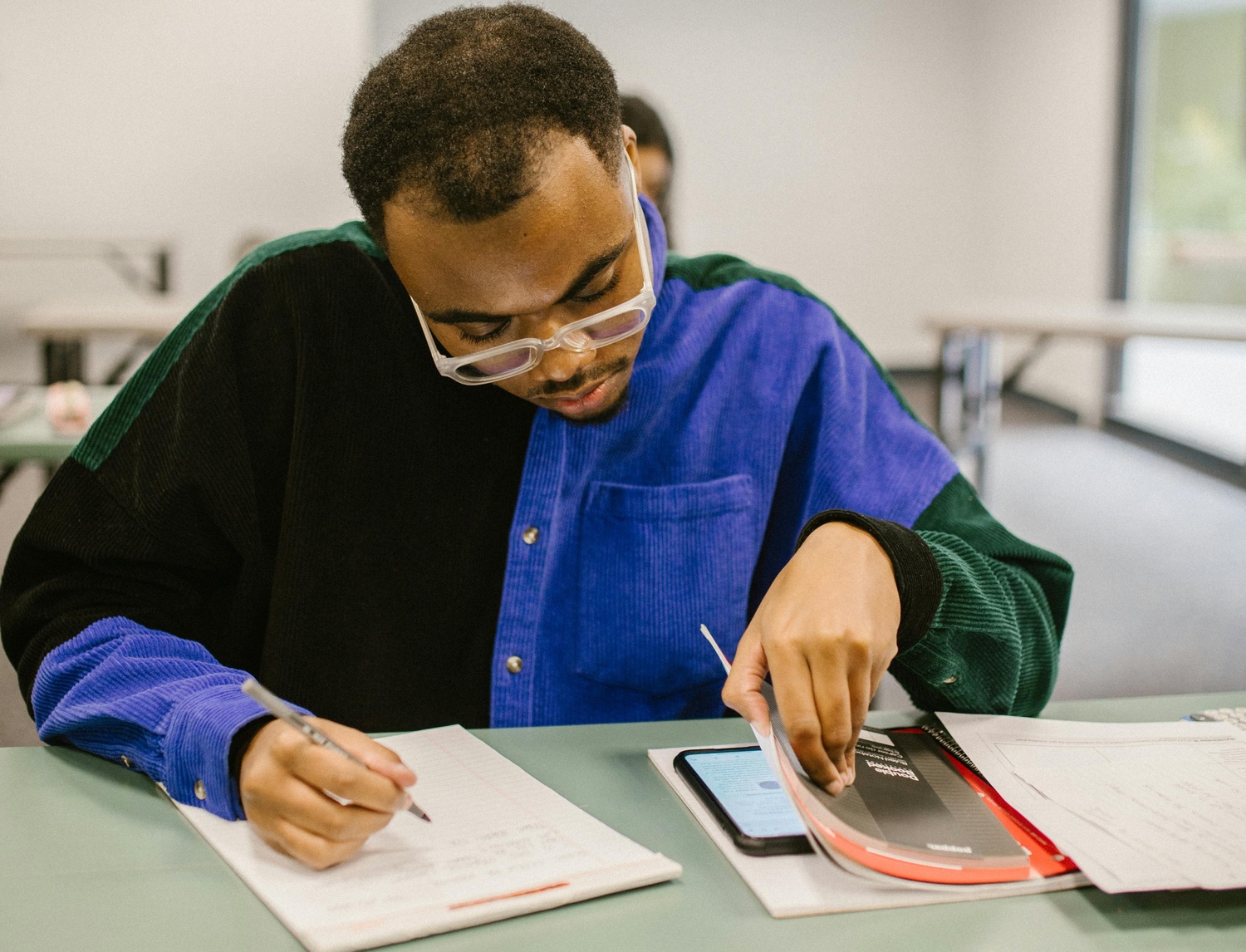
“It’s not good for them,” she shrugged, “but I don’t care. If you call out AI usage right there in the middle of a test, you’re not only being an asshole but possibly ruining someone’s life. The rest you can’t really prove. I just try to grade the work as fairly as possible.” She brings up quite a fair rising concern, and one that has hovered over students’ heads since the 1940s, the first wave of financial aid for US higher education.
For a large majority, financial aid is contingent on good grades and good behavior. That kind of stringent pressure can incentivize AI use, most particularly among students whose pre-university education was of poor quality, yet it simultaneously manufactures a new reason to fear getting kicked out. A mass anxiety, you could say, and one reflective of the rather entitling new rebrand higher education has endured.
A 2023 Walton Family Foundation poll noted that 62% of Gen Z students were planning to attend college, compared to 74% of millennials. 46% in a different study were skeptical of college as a “valuable investment,” finding that the cost wasn’t worth the content. Relatedly, it’s nearly impossible to find high-paying work without a college degree and harder still to move up should you manage that feat, which makes university attendance nothing more than a means to an end. White-collar workplace promotions are often contingent on education as much as they are on skill and experience, and, let’s be real, most workplaces hire degree holders over non-degree candidates even when they don’t have to.
Until recently, a degree may not have implied intelligence, but it did mean you were attentive enough to slog through 4 years of nonstop information. These days, we go for the future benefits before we do for whatever educational value we may glean because attending university is the most baseline requirement.

Nowadays, though, that’s a foreboding sign. When everyone goes to college only to game this system, uses AI to get through it, and continues to use AI once hired, innovation grinds to a halt. The same brains that could have invented Apple’s competition are enslaved to some robot that’s already farmed all their ideas ten times over. If, as a white-collar employee, you fail to contribute to your company beyond basic AI-generated ideas, you become a replaceable cog, and you are entitled to nothing.
Nora, who goes to college in the western US, admits herself as part of this tribe. Coming from what she describes as a hardworking, mostly educated family, she believes that universities are no longer half as beneficial as they once were. “People mostly go because they have to, but I would also say the quality of the classes, the work, the opportunities, everything is terrible unless you go somewhere really good or have connections. No one actually wants to do this. You have to live in dorms, the food sucks, and, for me, none of my classes are challenging. I don’t even need AI. I’m taking classes right now to prepare for research [in the honors college] and it feels like kindergarten.”
She finds that the college experience is oversaturated by corporate interest, leaving students to make the best of things at institutions that don’t have their interests — that is, education and employment — at heart. As universities launch “rebrand campaigns,” lower grading standards, and cater to shareholders over the human beings they exist for (and perhaps because in many countries academic research is an integral part of professors’ careers), it’s students’ BS detectors that go off first. “There was an announcement a while ago [at my university] where they called the students ‘customers.’ And I guess we kind of are, but it made me…realize that college is literally a company. It’s like when you go [shopping] and it looks good in the store, yet you know the workers in the back are tired and miserable.”
AI ties back into it because, well, it gets you out of there faster. “Being a student is basically a rush job now,” Nora shrugged. “Yeah, AI is making us dumber, but so are computers. You literally need computers for college now. Phones also make us extremely dumb, yet we can’t live without them anymore.”
Nora paused for a moment when I asked her what a feasible solution would look like. “I guess, like, slowly reducing technology on campus. Because when we have it available in literally every building, we don’t even want to use our brains. Also, if some jobs stopped requiring college degrees…the people who don’t actually want to be college students won’t have to do it. Like, why should I put my family in debt for this? Especially since half the jobs we have now are just training AI to replace us?”
.png)

.png)

.png)
